Solar Mounting Systems Explained: Types & Benefits
As electricity demand continues to rise in India, businesses are constantly looking for alternative solutions to manage energy consumption and operational costs, of which rooftop solar systems have emerged as one of the most practical options, where industrial set-ups can generate electricity from sunlight. To achieve optimal performance and long-term returns in commercial and industrial applications, professional planning and execution are essential.
Steps Involved in Professional Rooftop Solar Installation
Professional rooftop solar installation involves a series of steps to ensure efficiency and safety in the installation process.
- Site assessment and roof inspection
- System design and component selection
- Installation of mounting structures and panels
- Electrical connections and inverter configuration
- System testing and commissioning
- Performance monitoring
Each of these stages plays an important role in ensuring that the rooftop solar system operates efficiently and safely for many years.
Site Assessment Before Rooftop Solar Power Installation
When planning professional rooftop solar installation services, it is essential to assess the site first. Most solar experts evaluate the facility from different aspects, like roof size, orientation, shading conditions, and structural strength. This helps determine if the installed solar panels capture maximum solar energy, and what electricity the system realistically generates.
Professionals also evaluate a facility's electricity consumption patterns to determine the ideal capacity for a rooftop solar system. Solar systems that are carefully planned and installed generate adequate electricity to offset a significant portion of commercial and industrial energy consumption. One may also evaluate the placement of roof solar panels where maximum sunlight can fall through the day to convert to electricity.
Customized Roof Solar Panel System Design and Component Selection
After inspecting the site, the installation company provides a customized design that defines how the rooftop solar system must be installed, in consideration with panel layout, inverter placement, wiring routes, and mounting structures that secure the panels to the roof.
Professional installers develop a technically balanced system where all components are optimized for high-capacity commercial and industrial performance. The inverter must match the higher energy output of solar panels with mounting structures that can withstand harsh weather conditions like heavy rainfall or strong winds. When designed thoughtfully, the rooftop solar solution can generate solar energy over a long period of time consistently without any major maintenance needs.
Most businesses understand different aspects of rooftop solar power installation, like a reduction in electricity bills and a lesser dependency on conventional energy sources. In addition, businesses benefit from long-term performance, operational efficiency, and relatively low maintenance when rooftop solar installation is done professionally.
Installation, Safety Measures, and Rooftop Solar System Setup
Once the design and approval phase is completed, the actual rooftop solar installation process begins with strict adherence to industrial safety and compliance standards. In this phase, solar panels are mounted on carefully engineered structures that provide durability while maintaining proper performance efficiency.
Key Stages in Rooftop Solar Installation
|
Installation Stage |
What Professionals Do |
Why It Matters |
|
Mounting Structure Installation |
Secure mounting frames are fixed to the rooftop |
Ensures stability and durability in wind and rain |
|
Solar Panel Placement |
Panels are installed in optimal orientation |
Maximizes solar energy generation |
|
Electrical Wiring |
Panels are connected to the inverter and the electrical system |
Enables energy conversion and safe power flow |
|
Inverter Setup |
An inverter converts solar DC power to usable AC electricity |
Allows appliances to use solar power |
|
Grounding & Safety Checks |
Proper grounding and protection devices are installed |
Prevents electrical faults and ensures safety |
Rooftop Solar Testing, Commissioning, and Performance Monitoring
Once the installation process is completed, the system must be tested to ensure that the inverter is functioning correctly with secure electrical connections to ensure the rooftop solar system is producing the expected amount of electricity.
Most modern rooftop solar systems include digital monitoring dashboards that allow businesses to track daily energy generation, system efficiency, and performance trends in real time.
Choosing a professional rooftop solar installation service provider like Waaree RT allows commercial and industrial clients to effortlessly sail through every stage, from system design to commissioning, with accuracy. A well-installed rooftop solar system helps with the effortless generation of electrical energy from solar energy for decades without much maintenance. This allows businesses to reduce electricity bills as well as rely less on the grid, resulting in long-term energy savings.
FAQs
Rooftop solar installation covers the following steps: assessing the roof and treating it, designing solar panel layout, installing the mounting structures, and electrical components.
Rooftop solar system installation processes in commercial projects take about three weeks to a few months, depending on the system size and roof conditions.
Rooftop solar systems generate electricity depending on the available sunlight, any obstructing shade, and roof orientation.
Roof solar panels are suitable for most commercial and industrial setups where there is adequate sunlight, along with structural strength to support the system.
Rooftop solar power systems generate electricity even in cloudy weather, though with lesser output than on bright sunny days.
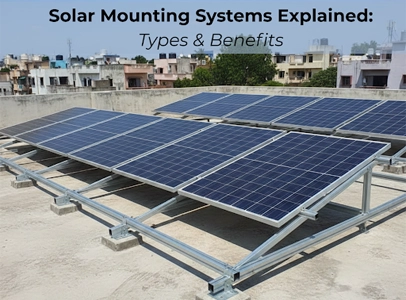
Understanding Solar Mounting Systems-The Foundation of Your Rooftop Solar Installation
Previous Blog





Blog Comment Form